/prod01/wlvacuk/media/departments/digital-content-and-communications/images-2026/Claire-Macdonald-graduate---courtyard-2-wolf-resized.jpg)
/prod01/wlvacuk/media/departments/digital-content-and-communications/submitted-news-images/nss2026_800x400-1.jpg)
/prod01/wlvacuk/media/departments/digital-content-and-communications/images-2026/Prashant-Pillai--Solange-Chamberlain----Stephen-Simpkins.jpeg)
/prod01/wlvacuk/media/departments/digital-content-and-communications/submitted-news-images/Indian-weightlifting-team.JPG)
/prod01/wlvacuk/media/departments/digital-content-and-communications/submitted-news-images/Women-in-Engineering-Day.JPG)
/prod01/wlvacuk/media/departments/digital-content-and-communications/images-18-19/220207-Midwives-Resized.jpg)

Back
Back

University establishes first non-communicable diseases (NCDs) Institute in the Horn of Africa
25/02/2026
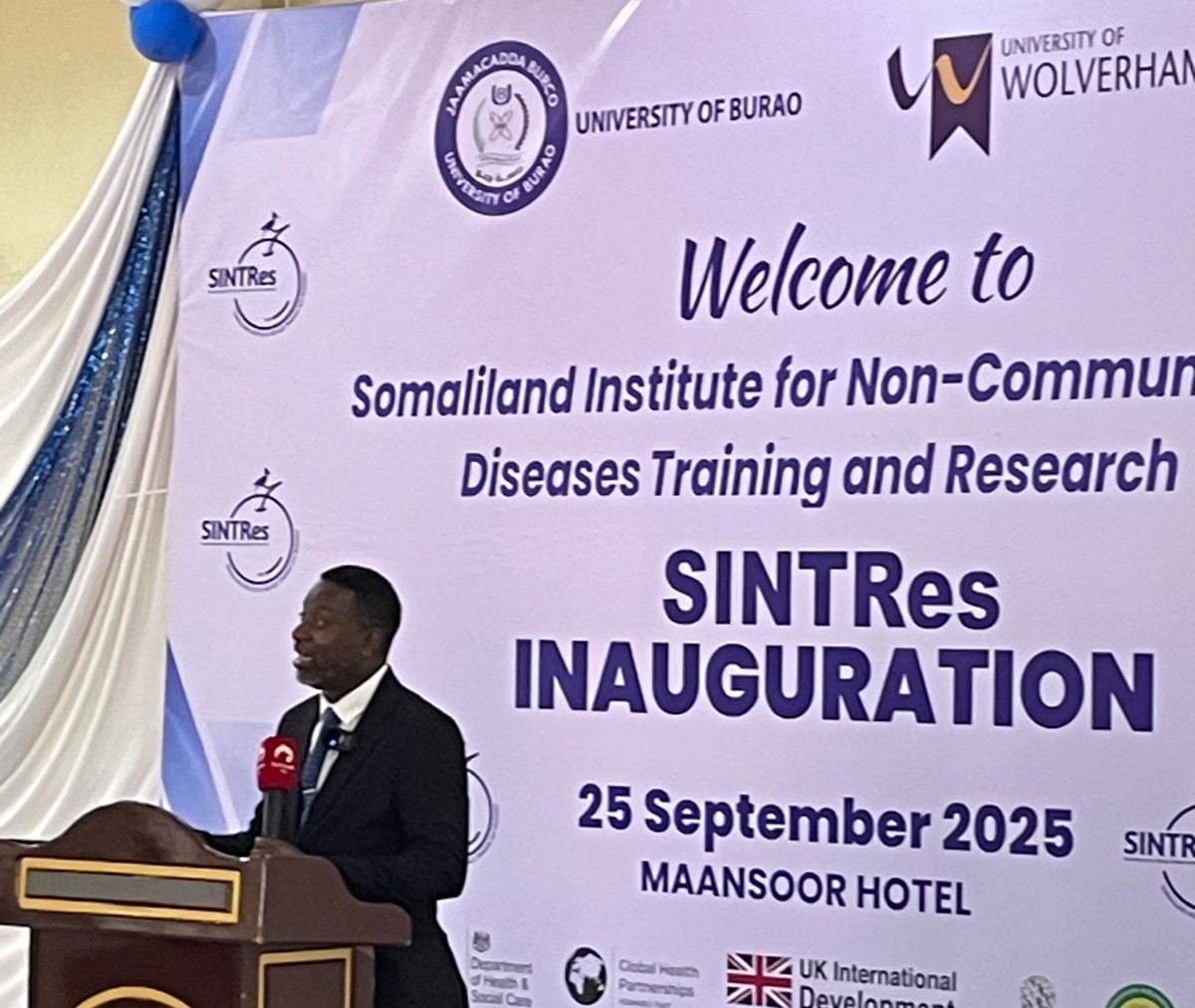
Academics from the University of are playing a leading role in strengthening health systems in the Horn of Africa through the creation of the region’s first dedicated Research and Training Institute for non-communicable diseases (NCDs).
The Wolverhampton Global Health Partnerships, led by Dr Opeolu Ojo, Reader in Diabetes and Metabolism, has worked collaboratively with the University of Burao (Somaliland), the Initiatives for Regional and International Development (IRiD), and the Somaliland Ministry of Health Development to establish the Somaliland Institute for Non-Communicable Diseases Training and Research.
This landmark centre aims to transform the prevention, early detection and long‑term management of NCDs across the region.
Non‑communicable diseases, including cardiovascular diseases, diabetes, chronic respiratory conditions and cancers, present one of the fastest-growing public health challenges in the Horn of Africa. With health systems already under significant pressure, the new Institute seeks to build resilience by enhancing workforce capability, supporting locally driven research, and embedding sustainable professional development across the healthcare sector.
Formally inaugurated in September 2025, the Institute is already delivering significant impact. More than 200 healthcare workers from across the region have undertaken Continuous Professional Development (CPD) training since its opening. In addition, six resident doctors have completed structured training in clinical research, equipping them with essential skills to design, conduct and translate research into real-world improvements in patient care.
The Institute serves as a regional hub for CPD, offering structured programmes, tailored training, research mentorship and collaborative learning opportunities. By developing evidence-based skills and strengthening research capacity, the centre is building a sustainable model of long-term health system improvement aligned with local priorities.
Dr Ojo said: “The establishment of the Somaliland Institute for Non-Communicable Diseases Training and Research represents a significant milestone in our collective efforts to strengthen health systems in the Horn of Africa. By investing in workforce development and clinical research capacity, we are supporting long-term, locally driven solutions to the growing burden of non-communicable diseases.”
The initiative has been funded by the UK Department of Health and Social Care, through a grant awarded to the University of Wolverhampton under the Global Health Partnerships programme (formerly the Tropical Health and Education Trust – THET). The programme supports equitable international health collaborations that enhance health outcomes in low‑ and middle‑income countries through sustainable knowledge exchange.
This work highlights the University’s wider commitment to global engagement, health equity and applied research that delivers tangible societal benefit both locally and internationally. By leading the creation of the region’s first NCD-focused research and training centre, Wolverhampton academics are helping to build more resilient health systems and establish enduring international partnerships.
The activities of the Wolverhampton Global Health Partnerships are also laying the foundations for the University’s proposed Centre for Global Health Research, which will build on existing collaborations, interdisciplinary expertise and capacity‑strengthening work to position the University as a leader in global health research and innovation.
For more information please contact the Corporate Communications Team.