/prod01/wlvacuk/media/departments/digital-content-and-communications/images-2026/Claire-Macdonald-graduate---courtyard-2-wolf-resized.jpg)
/prod01/wlvacuk/media/departments/digital-content-and-communications/submitted-news-images/nss2026_800x400-1.jpg)
/prod01/wlvacuk/media/departments/digital-content-and-communications/images-2026/University-research-helps-shape-Malaysias-dementia-future.jpg)
/prod01/wlvacuk/media/departments/digital-content-and-communications/submitted-news-images/Indian-weightlifting-team.JPG)
/prod01/wlvacuk/media/departments/digital-content-and-communications/Adopting-AI-for-Business.jpg)
/prod01/wlvacuk/media/departments/digital-content-and-communications/submitted-news-images/54505138639_670536a9d0_c.jpg)
/prod01/wlvacuk/media/departments/digital-content-and-communications/images-2024-25/240328-Lenovo-Motorsport-Students-Resized.jpg)
Back
Back

Young people invited to help researchers understand how climate fiction shapes attitudes to climate
08/07/2026
Researchers at the University are inviting young adults aged 18 to 25 to take part in a new study exploring how climate fiction – often known as ‘Cli-Fi’ – influences attitudes towards climate change and the future.
The project aims to understand how novels and stories about climate change affect the way young people think about environmental challenges, hope, resilience and the world they will inherit.
During a summer where UK temperatures are breaking records, the research comes at a significant moment. The latest report from the Intergovernmental Panel on Climate Change (IPCC), released in 2023, concludes that human activities have unequivocally caused global warming, with global temperatures having already reached 1.1°C above pre-industrial levels. Many scientists now expect the 1.5°C target agreed in the Paris Climate Agreement to be breached within the next few years. Across Europe, June 2026 saw temperature records broken during an intense heatwave, with the UK's highest-ever June temperature reaching 37.7°C. Scientists have concluded that such extreme temperatures would have been virtually impossible without human-caused climate change.
While climate change is often discussed as a future problem, many of the projected impacts are expected to occur within the lifetimes of today's young adults. The Met Office predicts that, without significant reductions in greenhouse gas emissions, parts of southern England could see average hottest summer days approaching 40°C by the 2070s. More intense rainfall and flooding are also expected, creating challenges for homes, businesses, infrastructure and communities across the UK.
Against this backdrop, concern among young people is growing. Research shows that around 80 per cent of young people in the UK are moderately or significantly worried about climate change, with more than a quarter reporting that climate anxiety affects their ability to function in everyday life.
Despite this, climate education remains limited. Only 18 per cent of teachers report feeling adequately trained to educate students about climate change and its impacts, while just 17 per cent say that climate change is covered in core subjects beyond Science and Geography.
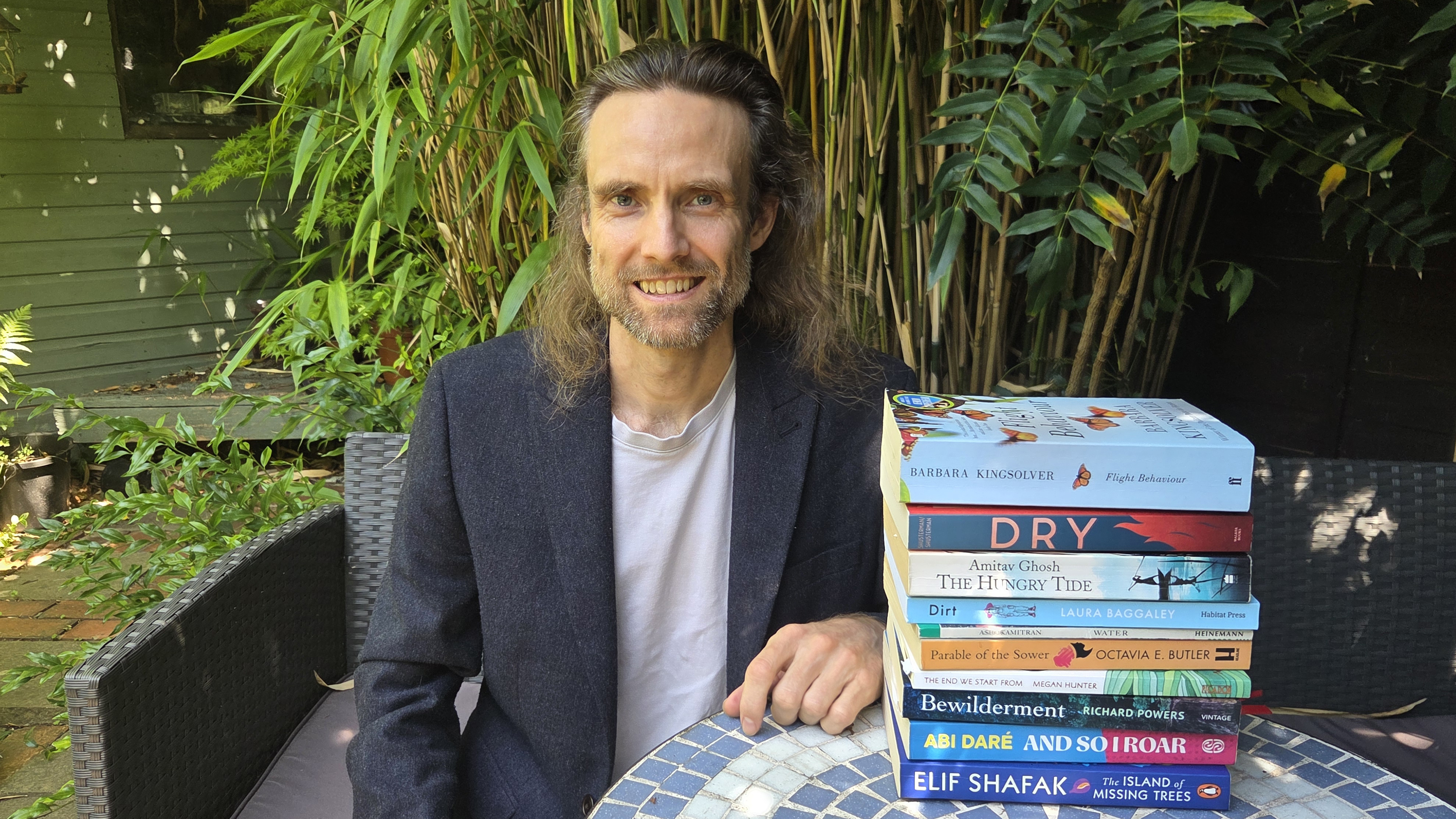
Dr Peter Harvey, Post Doctoral Research Fellow from University of Wolverhampton said:
"If we're going to meet the challenges posed by climate change, we're going to need to do more than just understand the science. We need to tell new stories about our relationship with the natural world, and about how we can build a positive future while looking after the planet we live on.
"English literature scholars are excited by the potential of climate fiction to help people imagine different futures. But what kinds of stories are most helpful – and do different people respond to different kinds of stories in different ways?
"To help answer this question, we want to know what young people are currently reading and what stories they've found helpful in thinking about their own futures. If you're aged between 18 and 25, and you can recommend a great novel or story about climate change, we want to hear from you."
Climate fiction has emerged as a growing literary genre, exploring themes such as environmental change, sustainability, technological innovation, adaptation and human resilience. Researchers hope the survey will provide valuable insights into whether storytelling can help people engage with climate change in constructive and empowering ways.
Participants are invited to complete a short online survey and share the books, stories and narratives that have shaped their understanding of climate change and the future.
The survey is available at: https://wolves.questionpro.eu/a/TakeSurvey?tt=n085bnu/ugK2Dwy1IFF%2BWw%3D%3D
Anyone aged between 18 and 25 is eligible to participate.
Photo caption: Dr Harvey sits with his own collection of climate fiction
For more information please contact the Corporate Communications Team.